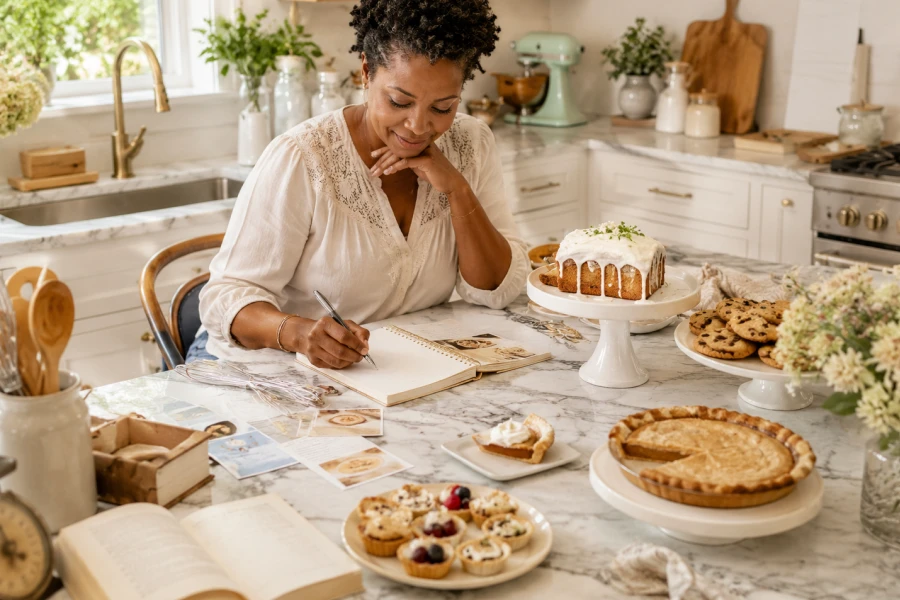
Vintage dessert planning helps bakers create spreads that feel curated instead of crowded. The best tables do not rely on nostalgia alone. They use memory, structure, flavor, and presentation together. A baker might love old recipe cards, diner counters, holiday pies, or family cakes. Those ideas become stronger when organized into a clear menu system. This approach gives every dessert a purpose. It also helps creators avoid random combinations that look charming but eat poorly. When done well, the spread feels generous, personal, and professional. It invites guests to linger. It also gives bakers a recognizable creative voice.
A strong spread needs one central item. That hero may be a tall cake, a glossy pie, a trifle bowl, or a platter of filled pastries. The rest of the menu should support it. This prevents the table from competing with itself. A baker can then add smaller pieces that echo the mood. Cookies, bars, cups, and fruit elements all work well. A bakery menu planning resource can make this decision easier. It helps creators choose anchor items before adding accents. That order creates a better final result.
Flavor families keep dessert planning focused. Chocolate and cherry can create one direction. Lemon, vanilla, and berry can create another. Caramel, apple, and spice may suit a warmer gathering. Bakers should choose a clear family before selecting too many recipes. This keeps shopping simpler and styling cleaner. It also helps guests understand the table intuitively. A spread inspired by old favorites in a modern setting can still feel fresh when flavors support each other. Without this discipline, even beautiful desserts can feel disconnected. Clarity makes the entire experience more enjoyable.
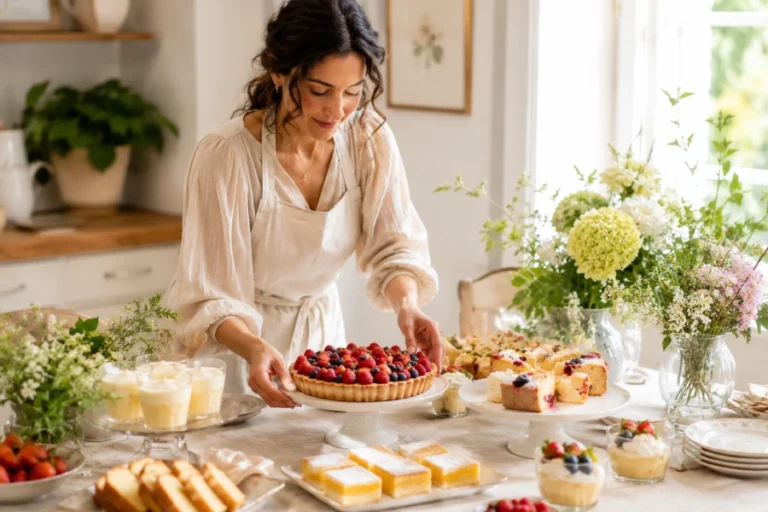
Visual rhythm turns a collection of sweets into a designed scene. Tall items need low items beside them. Round shapes need clean lines nearby. Creamy desserts need baked textures. Pale colors need darker accents for depth. These choices affect how the table photographs and how guests move through it. Creators can use comfort dessert ideas while still building a sophisticated layout. The result should feel abundant without looking messy. A balanced spread gives the eye somewhere to rest. That calm makes the desserts look more desirable.
Many vintage desserts were designed for big family servings. Modern events often need cleaner portions. Bakers can adapt recipes without losing the spirit. A full pie can become tartlets. A pudding bowl can become individual cups. A sheet cake can become neat squares. These changes make service easier and reduce leftovers. They also let guests try more than one item. Practical portioning supports both hospitality and business. For creators selling dessert boxes, smaller formats can increase perceived variety. The emotional appeal remains intact. The experience simply becomes easier to serve, package, photograph, and enjoy.
Seasonality gives this style year-round life. Spring may feature lemon cakes, strawberry cream, and coconut bars. Summer can bring peach cobbler, icebox pies, and chilled parfaits. Fall suits spice cakes, apple desserts, and caramel notes. Winter welcomes chocolate, peppermint, custard, and deep berry flavors. A dessert menu builder helps creators rotate ideas without starting from zero each time. Seasonal planning also keeps customers interested. The brand stays familiar, yet the menu changes enough to feel fresh. That balance supports repeat attention.
A reliable system helps bakers work faster and more confidently. They can choose one hero dessert, two supporting sweets, one texture contrast, and one visual accent. This simple structure works for birthdays, brunches, holiday tables, and content shoots. It also prevents overthinking. With nostalgic baking inspiration, the system feels creative rather than restrictive. Each new spread becomes easier to design. Customers notice the consistency. Guests remember the warmth. The baker gains a signature style that can grow across menus, photos, and seasonal offers.

Leave a comment