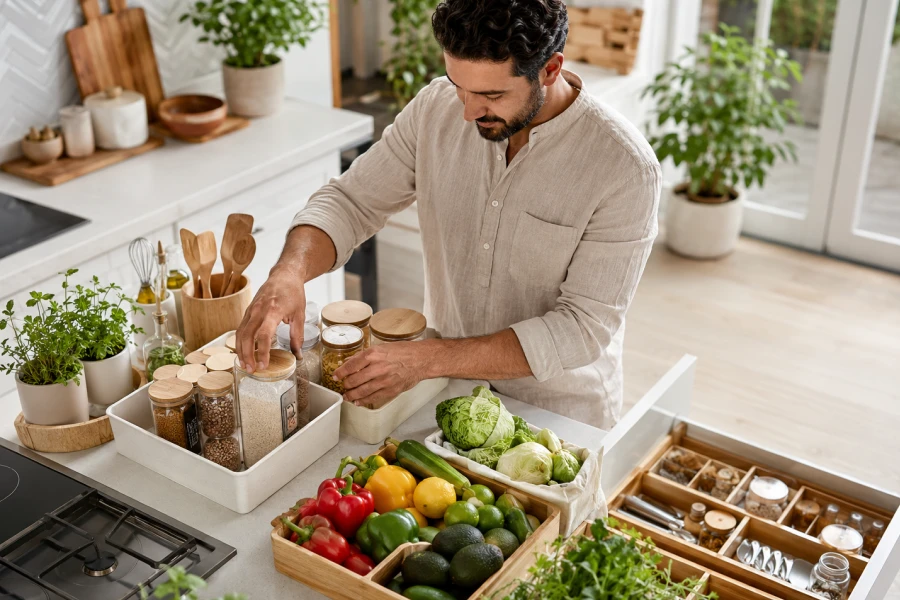
Kitchen storage ideas for small spaces should make cooking feel easier, not more complicated. A small kitchen can become overwhelming when every cabinet is packed and every counter holds overflow. Good storage reduces friction. It keeps tools visible, food reachable, and surfaces ready for real work. The best ideas are not always the fanciest. They are the ones that match daily routines. A narrow shelf, smart hook, or better drawer layout can change the entire room. When storage supports movement, cooking feels calmer. That is the real goal for any compact kitchen.
Hidden clutter creates daily frustration. People forget what they own when cans, containers, and tools disappear behind other items. Visibility helps prevent duplicates and wasted food. Clear bins, open baskets, risers, and turntables can all help. A tiny kitchen layout idea should make important items easy to spot. It should not create a fragile display that fails after one grocery trip. Practical visibility feels simple. Users can find what they need quickly. That speed makes small kitchens feel less stressful.
Small kitchens often have unused surfaces outside standard storage. The sides of cabinets, backs of doors, empty wall strips, and refrigerator sides may offer possibilities. Hooks, rails, slim shelves, and magnetic solutions can add function carefully. Safety and weight limits matter. Storage should never block movement or create hazards. This broader thinking connects naturally with zone-based kitchen organization for a more complete setup. When storage expands beyond cabinets, the kitchen gains breathing room. Even a few inches can make daily cooking easier.
Containers can save space or waste it. Mismatched containers often stack poorly and lose lids. A smaller set of nesting containers usually works better. Square and rectangular shapes use shelf space more efficiently than round ones. A space-saving kitchen tool should earn its place by solving a real problem. Users should avoid buying containers before measuring shelves and drawers. Good storage starts with dimensions. It also depends on habits. The most beautiful container is useless if no one maintains it.
Meal moments make storage intuitive. Breakfast items can live together. Baking items can share one bin. Lunch containers can sit near wraps and bags. Coffee and tea can form a small beverage zone. This method supports real life better than overly broad categories. It also helps families find things quickly. A child making breakfast should not search through dinner supplies. A busy adult packing lunch should have containers nearby. Meal-based grouping reduces morning stress. It also shows which items are taking too much space. Small kitchens work better when storage reflects actual routines.
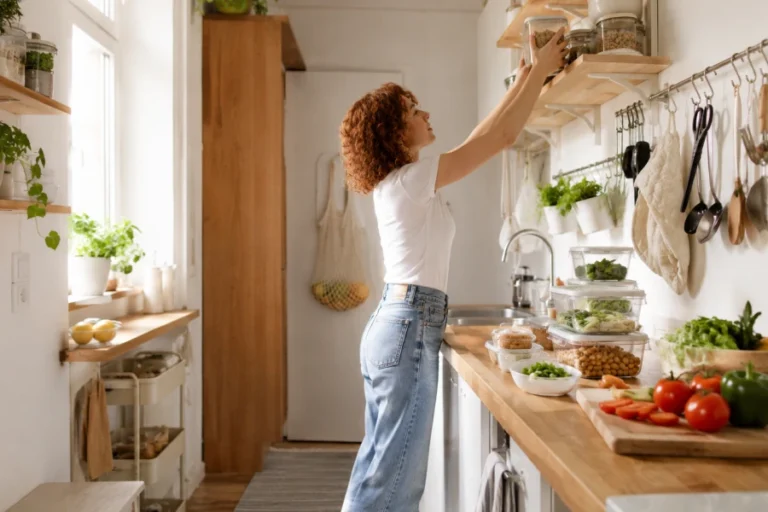
Open shelving can help when cabinets are limited. It works best for attractive, frequently used items. Plates, glasses, bowls, jars, and cookbooks without visible clutter can look beautiful. However, open shelves should not become overflow zones. A cabinet storage solution may still be needed for less attractive essentials. Balance matters. Shelves should feel airy, not packed. Repeating colors and materials keeps them calm. Open storage can make a small kitchen feel larger when edited carefully.
Small kitchens change with seasons, routines, and household needs. A system that works today may need adjustment later. Flexible bins, movable risers, hooks, and modular shelves make updates easier. A compact kitchen organization approach should allow change without starting over. This keeps the room useful over time. It also prevents perfectionism. The kitchen does not need one final arrangement forever. It needs a system that can respond to real life. Flexibility is what keeps small-space storage sustainable.

Leave a comment