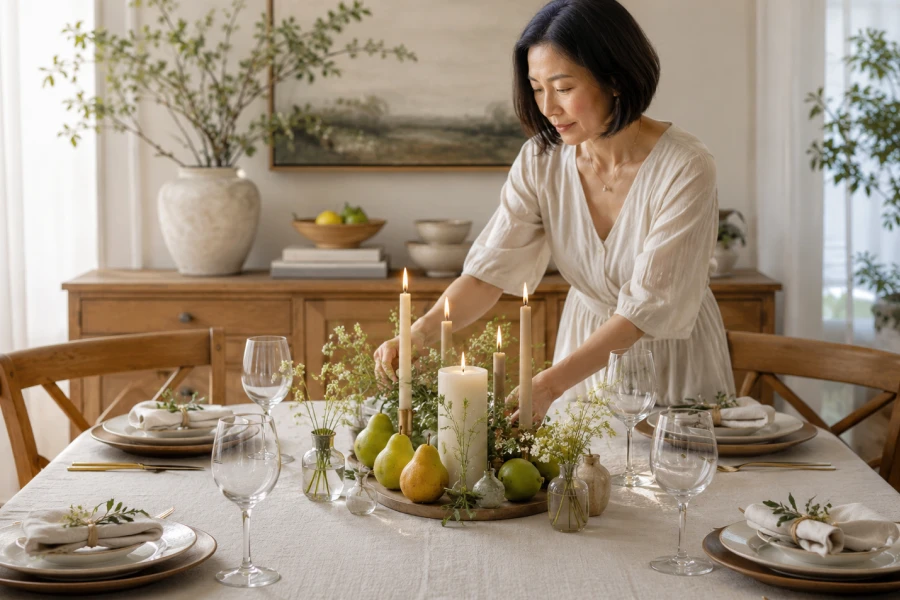
Homemade table display ideas can make a meal feel more thoughtful before food appears. Guests notice when a table has warmth, order, and personality. They do not need perfection. They need a setting that feels cared for. A handmade display can use simple objects, natural materials, and personal touches. It can also reflect the season, occasion, or host’s style. The best designs feel welcoming rather than forced. They leave room for plates, laughter, and movement. With the right structure, even everyday items can create a special mood. That is what makes homemade styling so useful.
A center line gives the table structure. This can be a runner, garland, row of candles, tray, or series of small vessels. Once the line is clear, hosts can add accents around it. This prevents random placement. It also helps the table feel balanced from every seat. A handmade centerpiece idea works best when it follows this visual path. The design does not need to be symmetrical. It simply needs rhythm. Guests should understand the table at a glance. That clarity feels calming.
Different occasions need different materials. A casual brunch may call for fruit, flowers, and pale linens. A dinner party may need candles, deeper tones, and ceramic pieces. A holiday table may use greenery, ribbon, or metallic touches. The occasion should guide the mood before shopping begins. This prevents overdecorating. It also connects well with low-cost centerpiece styling when hosts want beauty without overspending. Materials should support the feeling of the gathering. They should not distract from it. A clear occasion makes every choice easier and more meaningful.
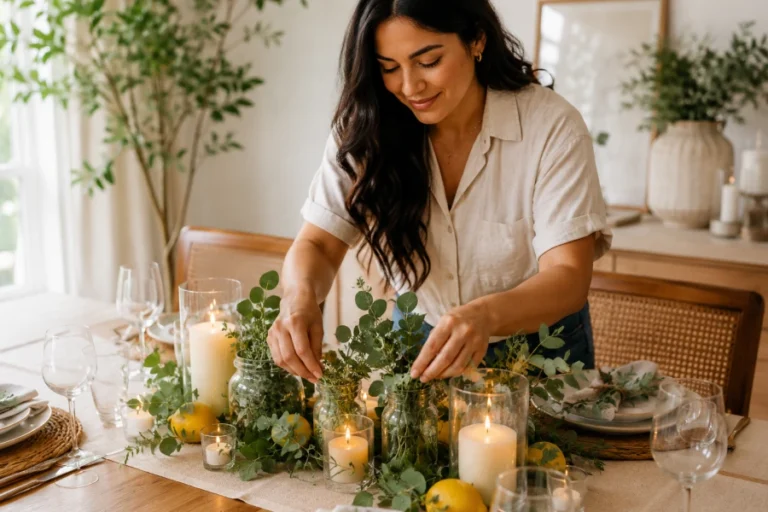
Natural details often look more expensive than they are. Branches, herbs, fruit, stones, shells, dried flowers, and leaves can create beautiful texture. They also help the table feel connected to the season. A few sprigs of rosemary beside linen napkins can feel elegant. Citrus in a bowl can feel bright and abundant. Dried grasses in slim bottles can feel modern. With seasonal table accents, hosts can refresh the table without buying many new pieces. Nature supplies color, shape, and softness. The result feels relaxed but styled.
Layering makes a table feel rich, but clutter makes it uncomfortable. Hosts should think in levels. A base layer might be fabric. A second layer might be trays or bowls. A third layer might be candles, flowers, or small accents. Each layer needs enough space to breathe. If guests cannot place a glass easily, the display is too large. Small tables especially need discipline. One strong cluster may work better than decorations across the entire surface. Layers should guide the eye, not trap it. Good editing makes homemade decor look confident and finished.
Everyday hosting benefits from simple repeatable formulas. A tray, two candles, one small vase, and a bowl of fruit can work again and again. The details can change with the season. This saves time and reduces stress. It also helps hosts build confidence. A simple table styling approach makes last-minute gatherings feel more polished. There is no need to reinvent the table every time. A dependable formula becomes part of the host’s personal style. Guests remember that sense of ease.
Personal details make a table memorable. A family serving dish, handmade napkin ring, handwritten menu card without visible clutter, or favorite color palette can add meaning. The goal is not to explain every object. It is to create quiet connection. Guests feel that care even if they do not name it. A budget table decor mindset also encourages creativity over spending. That is why homemade displays often feel warmer than store-bought sets. They carry the host’s eye, effort, and welcome.

Leave a comment